

You Can Attend Church Without Practicing Church
Jesus didn't train His disciples to attend an event. He formed them through a shared way of life.

This week a few visiting disciples from OKC gathered with us at a local coffee shop. Their Bibles were open and the Church Waffle, a simple diagram of twelve church practices, was in the middle.
The exercise was simple. Take the twelve practices we use to describe a healthy church and read the ministry of Jesus through them, the whole three years before Acts 2, and see how many were practiced by Jesus with disciples.


It didn’t take long. Somebody found the call to repent and believe almost right away, as Jesus called His first disciples in Mark 1. Then the meals in homes turned up everywhere, Peter’s mother in law serving everyone, Levi’s house with the tax collectors, and on it went. So much of it was just Him with His hands on sick people.
There was giving, prayer, and fellowship happening already. And we even see disciples being added (Acts 2:47) and the “called out” community taking shape.
About forty minutes in, one of them just said it out loud.
We keep finding the habits and rhythms of the church before anybody called it church.
And she was right. Acts 2 didn’t come out of nowhere. Jesus had spent three years living it with a few.
Here’s the question we landed on. What if church isn’t something you attend, but a life you learn to practice alongside other people?
We Learned to Recognize Church by The Meeting
Ask most of us to describe our church and listen for what comes out first.
Usually it’s where it meets and what time, who’s preaching and whether he’s any good, what the music’s like, how many people turned up. None of that’s a bad thing to care about in and of itself. It just tells you what we’ve been trained to take note of: church, for most of us, is the event.
A guy can be considered deeply involved in all of that.
He’s there most Sundays, runs the slides once a month, listens to the sermon again on his drive to work. And he can still go three years without once praying out loud with another believer, without opening his Bible alongside somebody and changing anything that week, without admitting a single real struggle to anyone, without driving a friend to a doctor’s appointment, without ever bringing up Jesus to the neighbor he nods at every morning.
Three years of that activity, and faithful the entire time.
Somewhere along the line, showing up became the way we measure whether someone is really part of the church.
And it is part of the picture, but it was never meant to carry the whole weight. The trouble was never that we gather.
It’s that we started asking the gathering to do everything, then wondered why everyone still feels like strangers to each other.
Next Lab: “The Aquila and Priscilla Pattern” (Wednesday, July 15th at 3PM ET). What if your work, home, and friendships became your disciple-making platform?
Jesus Had Been Preparing Acts 2 for Three Years
Most of us know the church’s shared life from Acts 2. Teaching, prayer, meals in homes, people selling things to cover each other’s needs, new believers almost daily. None of that arrived out of nowhere at Pentecost. The Spirit set it ablaze, but Jesus had already spent three years preparing the kindling.
And you can watch Him build it if you read backward.
Years of them sitting under His teaching on hillsides and in boats.
They saw Him slip off to pray so often that eventually they asked Him to teach them how.
He brought them into more homes than they could count, the respectable ones and the disreputable ones and the houses of strangers who’d invited a rabbi they’d never met.
He put them in charge of feeding thousands.
He sent them out to announce the kingdom long before any of them felt ready, and some towns ran them off, and He brought them back and they talked the whole thing through around a fire.
By the time the Spirit fell, following Jesus had already cost them their boats, changed who they were willing to eat with, and ruined their reputations back home.
So Acts 2 was never a new program. It was the same life they’d been living with Him all along, except now the Spirit was inside it. The church didn’t start as an event that needed volunteers. It started as a group of people who had already rebuilt their lives around Him.
He Formed Them Through Repeated Practice
Look at how He actually went about it. Not a curriculum. He kept bringing them into situations that worked on them.
For one thing, they were close. They got His real life, not a tidied-up version. They watched what He did when the Pharisees tried to trap Him with a question about taxes, when He was so worn out He slept through a storm, when a frantic father grabbed Him about a dying kid. They didn’t just inherit His conclusions, they saw how He carried Himself through all of it. He let them close enough to see what it cost Him.
Then He handed them things to do before they were anywhere near ready. Here are the baskets, go pass out the food. Walk into a town where you don’t know anybody and ask a stranger to put you up. They prayed for sick people and watched some of them get well. They announced the kingdom and got told to leave. He never sat them down and taught a unit on mission. They just did it next to Him, clumsily at first.
And then He had them do it again. And again. He didn’t teach prayer one time and move on. They tried, fumbled it, asked questions, got set straight, went back out. Do something enough times and it stops feeling like a decision.
And then the key element. He’d sit with them and talk about what just happened. What did you notice. What did you miss. He’d dig into whatever was underneath it, the arguing about who’d be greatest, the wanting to call down fire on a town, the frustration over the demon they couldn’t cast out. Doing the thing didn’t form them by itself. It was doing it and then debriefing it intentionally with Him.
A handful of fishermen and a tax collector slowly turned into a community of practice. Not through a seminar. Through the same few things done over and over around the same person, until eventually that was just their life.

Shared Habits Make a Shared People
People aren’t really shaped by what they say they care about. They’re shaped by whatever they keep doing with other disciples.
A family becomes the particular family it is through small things, who ends up cooking on Sundays, the argument that keeps flaring up in the car, who everybody calls first when something falls apart. Church isn’t any different.
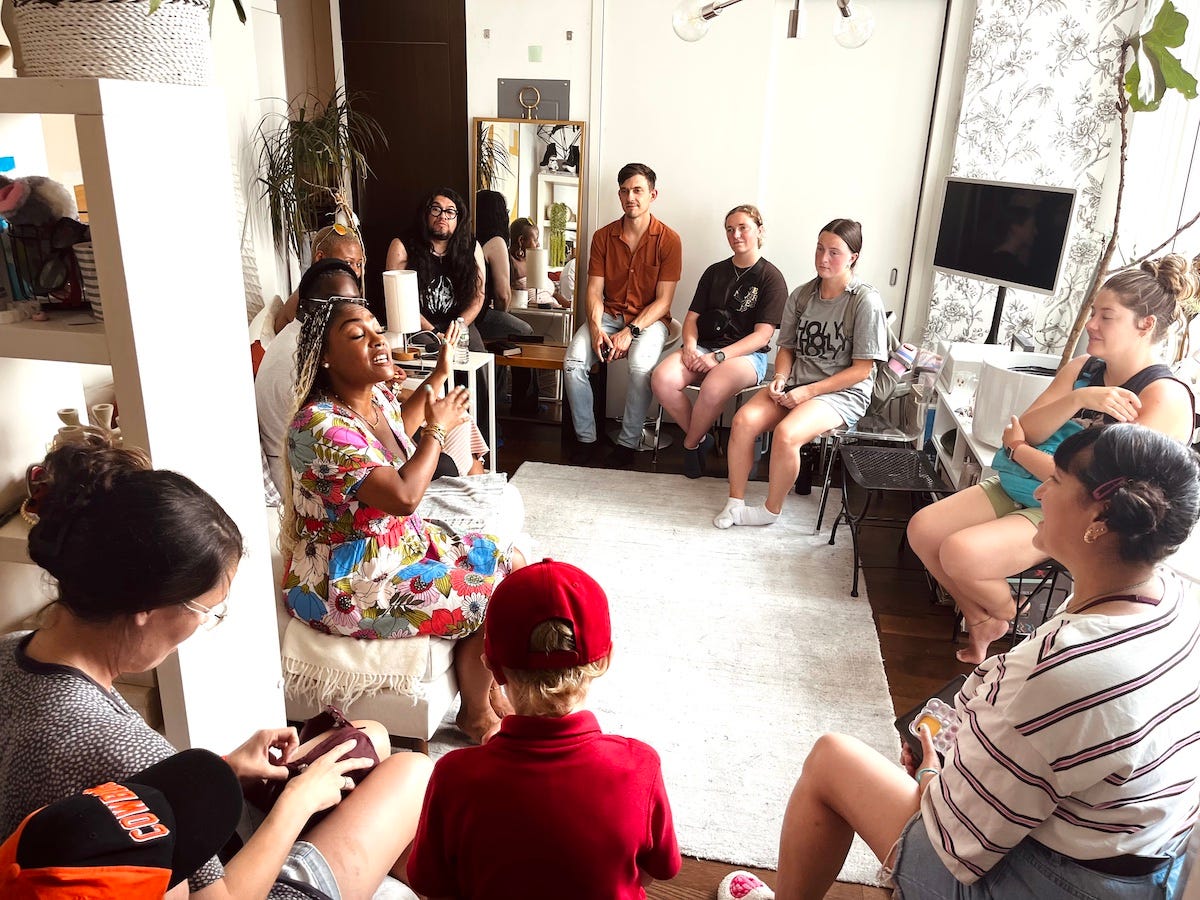
Take a group that prays out loud together on a Monday night, reads a chunk of Mark and actually does one thing it says before the weekend’s over, tells each other the hard truth and then forgives it, shows up when a car dies or a kid ends up in the ER, leaves room for the new person who doesn’t know any of the words yet, and gives until the bank balance feels it. Over time that group becomes something you can recognize. Not perfect, but recognizable. You can put whatever you want on the website.
The real culture is whatever those people are doing on an ordinary Tuesday when there’s no service to show up to.
And before anyone gets nervous, none of this earns anything from God. In Christ, He has already brought us near. We’re just learning what that grace looks like on a Tuesday.
A Crowd Can Gather Without Becoming a People
Here’s the uncomfortable part. A gathering can be genuinely good and still leave people total strangers to each other. The preaching’s faithful, the band is tight, the leaders are gifted, the room is full. And almost none of those lives ever actually touch.
You can stand next to the same person for a year of Sundays and never find out their marriage is coming apart. Share Lord’s Supper, shoulder to shoulder, with somebody you’ll never have over for dinner on a Tuesday (ouch). Put your check in the same plate with no clue the woman two rows ahead is behind on her rent. People go years like this and stay strangers.
Sitting in the same room is not the same as being one people.
It isn’t a size thing. A house church of nine can go just as cold.
What matters is what people are being trained to do. The setup teaches them what to expect, and if that’s park the car, walk in, watch, sing along, be home by noon, then of course they learn to consume. Nobody planned it. It just settles into the culture.
The Gathering is One Rhythm Inside a Larger Life
None of this is a knock on gathering. Gathering matters. People need teaching and worship and the table and prayer and the occasional hard correction, and they need each other. But the life of a church was never going to fit inside one ninety-minute window on a Sunday.
A lot of it only happens somewhere else. Next to someone in a recliner after chemo. Halfway up three flights of stairs with a couch that belongs to a guy from your Bible study. On the back porch with the coworker who keeps circling back to questions about religion and spirituality. In the ten quiet minutes after two people read a Gospel story and decide to go do what it says.
A church gathers, then scatters, then gathers again. You can find evidence the whole way through the Gospels. A good Sunday pushes people back out into the rest of it. It shouldn’t be handing them a tidy excuse to skip it.
A Better Question Than “How was the service?”
Most of the ways we grade a church are really about the event. Did people come, was the sermon clear, did the worship land, did we wrap up before the parking lot turned into a mess. Those are fine things to ask. None of them will tell you very effectively whether a people is actually being formed.
So ask different things. Are we hearing Jesus and actually doing what He says, together? Are we carrying each other’s real needs? Are regular people learning to disciple other regular people? Are we going after the people around us who want nothing to do with God, together?
And whatever you do, don’t walk out of here putting it all on the pastor.
Who knows the thing you’re afraid to say out loud? Who are you helping obey Jesus? Who are you going with? Who has access to your table, your calendar, your life?
Don’t Just Add Another Meeting
The fix usually isn’t another program. It’s more like recovering one rhythm you’ve lost, with two or three other people.
Eat together every couple of weeks. Read a Gospel story and have everyone name one thing they’ll go do before you meet again. Pray, by name, for the two or three people on your block who are furthest from God. Drive over and sit a while with someone who’s hurting. Say the embarrassing thing out loud instead of the version you’ve cleaned up. Have people over. Text the guy who seemed interested a month ago and then disappeared. And once you’ve actually gone and done something, come back together and talk about how it went.
None of that is impressive, which is sort of the whole point.
Steady beats dramatic almost every time. One big emotional night builds very little. It’s the boring repetition that forms anything real.
It’s what Jesus did with the Twelve. They watched and tried and dropped the ball and came back and got corrected and went out again, until the thing He’d asked them to do had become the way they lived.
Church is a life we keep practicing
Back to the table.
Those visiting OKC disciples went looking for the practices of the church inside the ministry of Jesus, and they found them all over the place. Not a finished institution. Not even Pentecost yet. Just people slowly learning to pray out loud, eat together, do what He said, and go knock on the next door. (Badly, most of the time.)
Church isn’t something you finish up before lunch on Sunday. It’s a life you keep practicing with other disciples through the whole week.
You really can attend church without ever practicing it.
But when two or three people start actually doing this together, week after unremarkable week, they become something no meeting could manufacture.
A people.
That’s what Jesus was building before Acts 2. He still hasn’t stopped.
Practice the way of Jesus with other disciples.
Our CoVo Multipliers Labs help ordinary believers move from learning about disciple making to actually doing it together. You’ll engage Scripture, practice disciple making in real conversations, receive coaching, and build simple rhythms that others can reproduce.
Next Lab: “The Aquila and Priscilla Pattern” (Wednesday, July 15th at 3PM ET).
Sitting here with tears filling my eyes because I crave this kind of connection and church and gathering and sending out and praying and sharing my table with others so desperately. I’m a long-time church goer who knows no one intimately and feels unknown and unseen. Thank you for putting words to this. May we be people who are the Church, not just attend the church.
It is a way of accepting that we must decrease so that Jesus may increase in the hearts of people. It is an approach that gives others the opportunity to know Jesus more easily, just as He is revealed in the Scriptures. May God bless you abundantly.